MHRA Consultation 2026: The Fee Increases Coming for Medical Device Manufacturers in 2027
The MHRA has opened a consultation on fee increases from April 2027 — including a proposed 70 % rise in the post-market surveillance fee. Manufacturers have until 25 September to respond.
MedNet EC-REP
Author
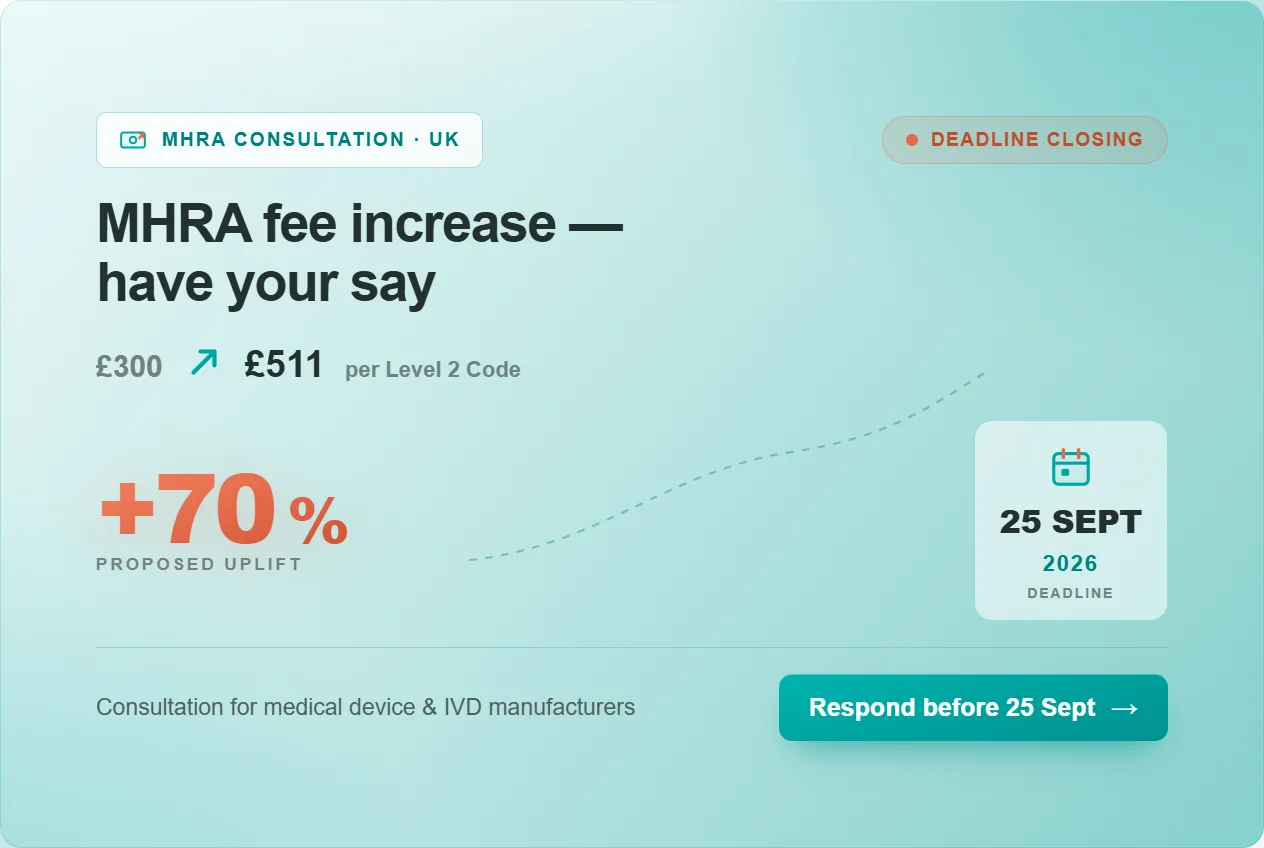
On 17 August 2026, the UK’s Medicines and Healthcare products Regulatory Agency (MHRA) opened a public consultation on proposed fee increases. The changes affect virtually every manufacturer with medical devices registered in the UK through a UK Responsible Person. Proposal 6 of the consultation is the one that matters most here, as it concerns the annual post-market surveillance fee.
The consultation closed on 25 September 2026, and the proposed changes are intended to take effect on 1 April 2027. The MHRA has not yet published its response. We will update this article once the final fees are confirmed.
What manufacturers should do before April 2027
The consultation closed on 25 September 2026, so the window for submitting comments has passed. The next step is the MHRA’s response, which will confirm which proposals go ahead and in what form. Until then, manufacturers can already prepare:
- Check your exposure to the PMS fee. The fee is charged per registered GMDN Level 2 category, so the number of categories in your UK registrations determines your annual cost. At the proposed £511 per category, a broad portfolio adds up quickly.
- Build the increase into your 2027 budget. Plan with the proposed figures for now and adjust once the final fees are published.
- Review SME support if it applies to you. Proposal 4 includes an expanded support framework offering fee waivers or vouchers, capped at £2 million per year. Eligibility and scope will only be confirmed in the MHRA’s response, so check the final details before relying on it.
- Watch for the MHRA’s response. We will update this article as soon as the final fees are confirmed.
The post-market surveillance fee is set to rise by 70 %
One point is particularly relevant for manufacturers of medical devices and IVDs: the proposed phased increase to the post-market surveillance (PMS) fee. This fee is charged annually per registered GMDN Level 2 category (Global Medical Device Nomenclature) and was introduced in April 2026 on a part-subsidised basis. Under Proposal 6 of the consultation, the fee would rise from £300 to £511 per category (an increase of 70 %) from 1 April 2027. Notably, the MHRA is proposing to continue partially subsidising the fee through 2027/28 and 2028/29 rather than moving straight to full cost recovery, specifically to reduce the immediate impact on the sector, including SMEs.
How manufacturers can respond
The consultation remains open until 25 September 2026. Manufacturers who wish to comment on the proposed changes can do so via the MHRA's official online survey. The agency has explicitly encouraged stakeholders to share the consultation with colleagues and networks who may also be affected.
For small and medium-sized enterprises, it is also worth noting that Proposal 4 includes an expanded support framework offering fee waivers or vouchers, capped at £2 million per year. Details on eligibility and scope should be checked directly against the consultation document, since these will only be finalised once the consultation has closed.
Conclusion
The proposed MHRA fee increases are not yet final, but the direction is clear: from 1 April 2027, manufacturers should expect higher fees, with the PMS fee rising by around 70 %. Anyone affected should factor this into their 2027 budget now rather than wait for the final decision. MedNet EC-REP can help you assess how these changes affect the registration done by your UK Responsible Person and advise you on all questions relating to your UK market access.
Need a UK Responsible Person?
Not sure how the proposed MHRA fee changes affect your UK registration? Get in touch and we'll help you choose the right UK Responsible Person for your business.
Related Articles

IVDR Rule 7: When Is IVD Control Material Class B? (MDCG 2020-16 Rev. 5)
MDCG 2020-16 Rev. 5 clarifies when IVD control material without an assigned value falls under class B, and when another rule applies.

New EU Study: Where Manufacturers and Authorised Representatives Really Stand on MDR and IVDR
New EU study finds 48% of manufacturers have withdrawn devices from the market. Key MDR/IVDR and AR findings for 2026. Read the numbers now.

Well-Established Technologies Under the MDR: EU Commission Expands Exemption List
The EU Commission has expanded the WET list under the MDR, easing requirements for certain class II and class III devices.
Stay Updated
Get the latest regulatory updates and industry insights delivered to your inbox.
Subscribe to Updates